Quantum Horizons Conference: when Science, Policy and Society met in Gdańsk
On May 7, Gdańsk became the European capital of conversations about the future of quantum technologies. It was here that the Quantum Horizons: Science – Policy – Society Conference took place, organized by the National Science Centre as the coordinator of the QuantERA Programme and the Polish Ministry of Science and Higher Education, in collaboration with the Quantum Flagship.
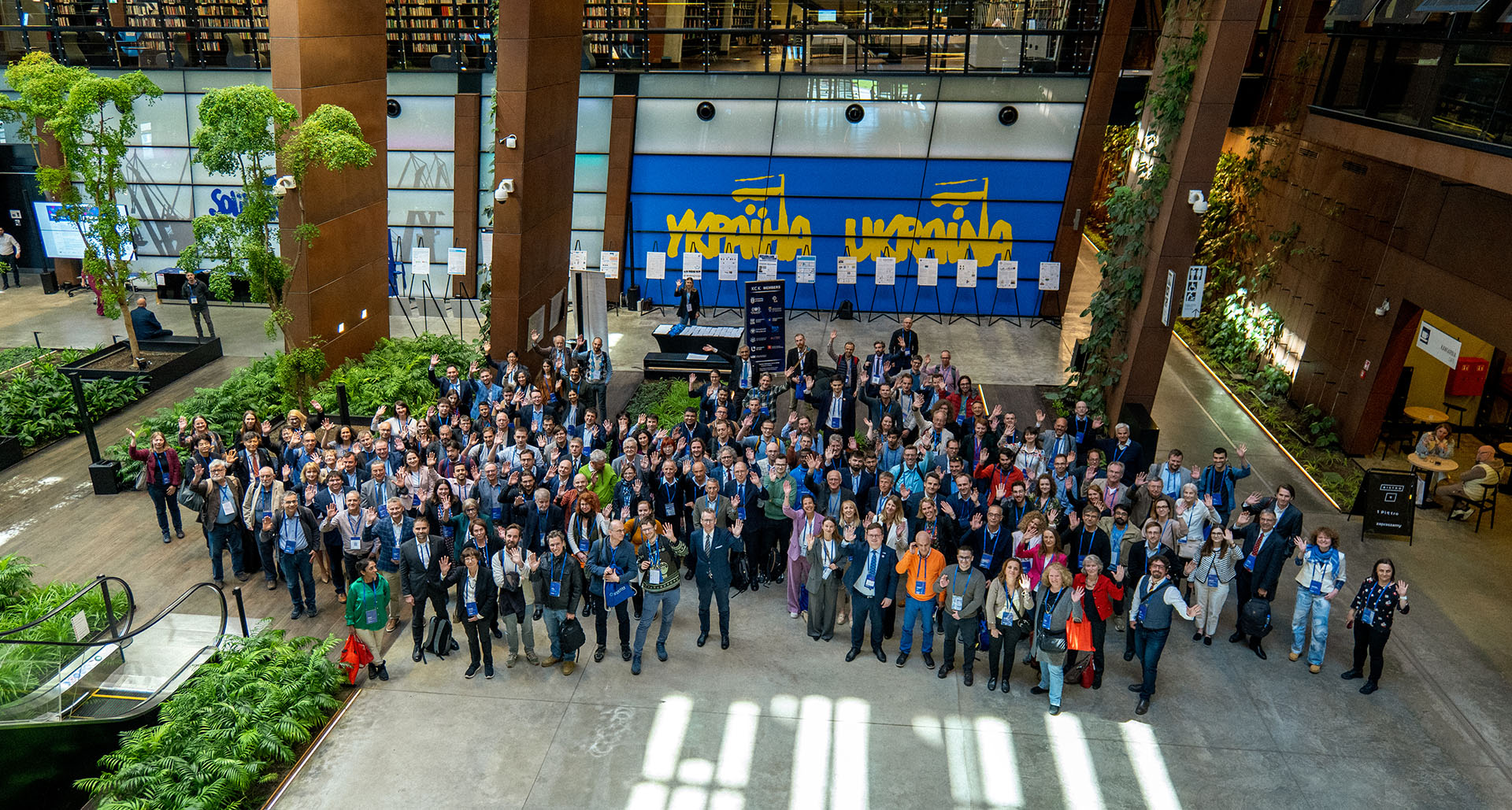
The event gathered over 200 participants from across Europe – representatives of science, policy, industry, and research funding organizations. Among the invited speakers were Prof. Artur Ekert (University of Oxford, Centre for Quantum Technologies, Singapore), one of the pioneers of quantum information science, Prof. Elisabeth Giacobino (French National Centre for Scientific Research – CNRS), who made a number of seminal contributions to the field of quantum optics, and Prof. Konrad Banaszek, QuantERA Scientific Coordinator and expert in quantum technologies.
European institutions were also strongly represented. The perspective of the European Commission was shared through a video address of Henna Virkkunen, Vice-President for Technological Sovereignty, Security and Democracy, and participation of Dr Thomas Skordas, Deputy Director General at DG for Communications Networks, Content and Technology (DG CONNECT). Alberto Gago Fernández, Director of the Office for a Digital Spain 2030 at the Ministry for the Digital Transformation and of the Civil Service, spoke about the digital transformation in Spain.
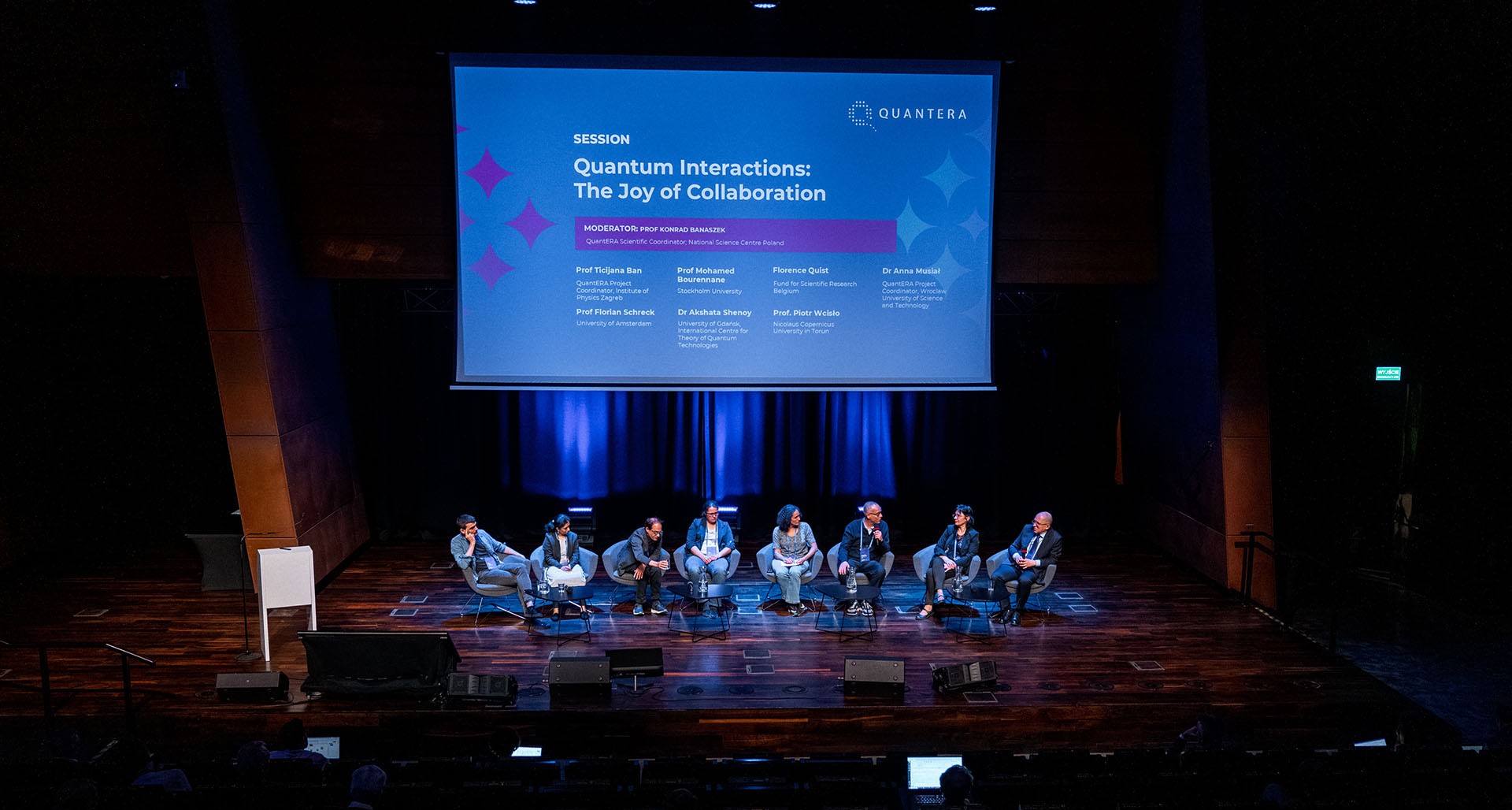
Diversity in expertise and perspective enriched the discussions, with strong representation from women in science and industry – among the panelists were Dr Anna Musiał (Wroclaw University of Science and Technology) and Dr Anna Kamińska (Creotech Instruments SA), both serving as QuantERA Project Coordinators. Dr Laure Le Bars, President of the European Quantum Industry Consortium and representative of SAP, also shared her insights on the future of the European quantum industry.
Europe in the race for technological sovereignty
Quantum technologies are one of the most promising areas of innovation, with the potential to revolutionize sectors such as IT, telecommunications, data security, medicine, and logistics. Already today, countries around the world are investing billions of euros in research on quantum computing, cryptography, simulations, sensing, metrology, and related fields.
Europe, through initiatives such as the European Quantum Flagship and the QuantERA Programme, actively supports the development of these technologies, aiming to remain competitive and reduce dependence on non-European solutions.
As emphasized during the conference, further development of the quantum sector requires:
- Robust research and development programs. Funding deep tech projects is a long-term investment that demands not only financial resources but also patience and strategic planning.
- Research infrastructure. The lack of access to modern laboratories, materials, and testing centers significantly limits research progress. As Dr Anna Musiał noted, without proper infrastructure, scientists cannot translate theory into practical solutions. Supporting maintenance of such infrastructure is equally important. Large infrastructure should be shared for the optimal funding exploitation. This can only be successful by providing continuity of valuable research projects by long-term funding, e.g., extension possibility to next phases with separate funding opportunity. But the most important thing is to attract and keep experienced researchers at this facilities at all cost.
- Market awareness. According to Dr Akshata Shenoy (University of Gdańsk, International Centre for Theory of Quantum Technologies), researchers need a better understanding of market needs in order to guide their work toward commercial applications.
- Transnational collaboration. Quantum technologies are highly interdisciplinary and require joint international research, sharing best practices, and openness to knowledge transfer. As Prof. Konrad Banaszek pointed out, this calls for appropriate funding mechanisms that will allow bottom-up incubation of new ideas and concepts.
“Unity is strength,” emphasized Prof. Florian Schreck (University of Amsterdam), pointing out that international collaboration makes it possible to achieve goals that individual research teams cannot reach on their own. He also highlighted the human dimension of collaboration – informal conversations, the exchange of ideas, and learning from one another often spark groundbreaking research projects. Prof. Mohamed Bourennane (Stockholm University) added that openness to spontaneous ideas and new concepts, often born in unexpected moments, plays a key role in scientific progress.
On the other hand, Prof. Ticijana Ban (University of Zagreb) noted that a lack of collaboration leads to repeated mistakes and wasted efforts solving problems that others have already resolved.
How to build the future of quantum technologies?
Several key insights emerged from the conference’s panels and discussions:
- Systemic support for young talent and interdisciplinary teams – Quantum technologies require collaboration between physicists, computer scientists, mathematicians, engineers, and innovation management experts.
- Bridging the gap between science and business – Companies should be involved in projects from the early stages of research, which increases the chances of faster implementation of new solutions.
- Creating European test and demonstration centers – These would enable scaling of new technologies under real market conditions and accelerate commercialization.
- Implementing active policies that support technology transfer – Not only from lab to industry, but also between countries and institutions.
A valuble look at the past
To close the event, participants had the opportunity to visit the European Solidarity Centre. This symbolic place served as a reminder of the power of unity in the face of great challenges.
The visit was not only a journey through the history of the Solidarity movement but also an inspiration for building a stronger European community in the field of innovation and technology.
Just as unity once changed the course of history, today it can accelerate the technological revolution.